.png)
Yealm Estuary to Moor

Come and join our
Riverfly Team
Help determine the invertebrate species in our river
Kindly funded by the Yealmpton Parish Council, South Hams District Council and the River Yealm Water Quality Group
A WildFish SmartRivers Project
Riverflies are at the base of the food chain for many species living in and around our river. Surveying the aquatic invertebrate diversity at points along the length of the river will provide a direct measure of ecological health that we can then map against pollutant concentrations and habitat status.

6 sampling sites at known problem areas on the Yealm
Our first biodiversity project
Riverfly sampling takes place in Spring and Autumn each year with the project running for a minimum of 3 years. Our sites are Marks Bridge, Popples Bridge, Silverbridge (Gorlofen), Puslinch Bridge, Cofflete Stream and Bridgend in Newton Ferrers. We've created our own portable lab so that we can identify our samples each season. We also rely on the experts at WildFish SmartRivers for training, to help us identify individual species and to verify our findings.

Working to improve biodiversity and conditions for fish
Complimenting our other river projects
Data gathered will show the impact of organic pollution, nutrient enrichment, sediment loading, chemical presence and flow stress on invertebrate species both present and absent in the river. It will help to build a more complete picture of our river and its water quality.
Results can be looked at in the context of the catchment and help facilitate steps to improve the river as well as monitor the impact made by remedial projects we undertake.

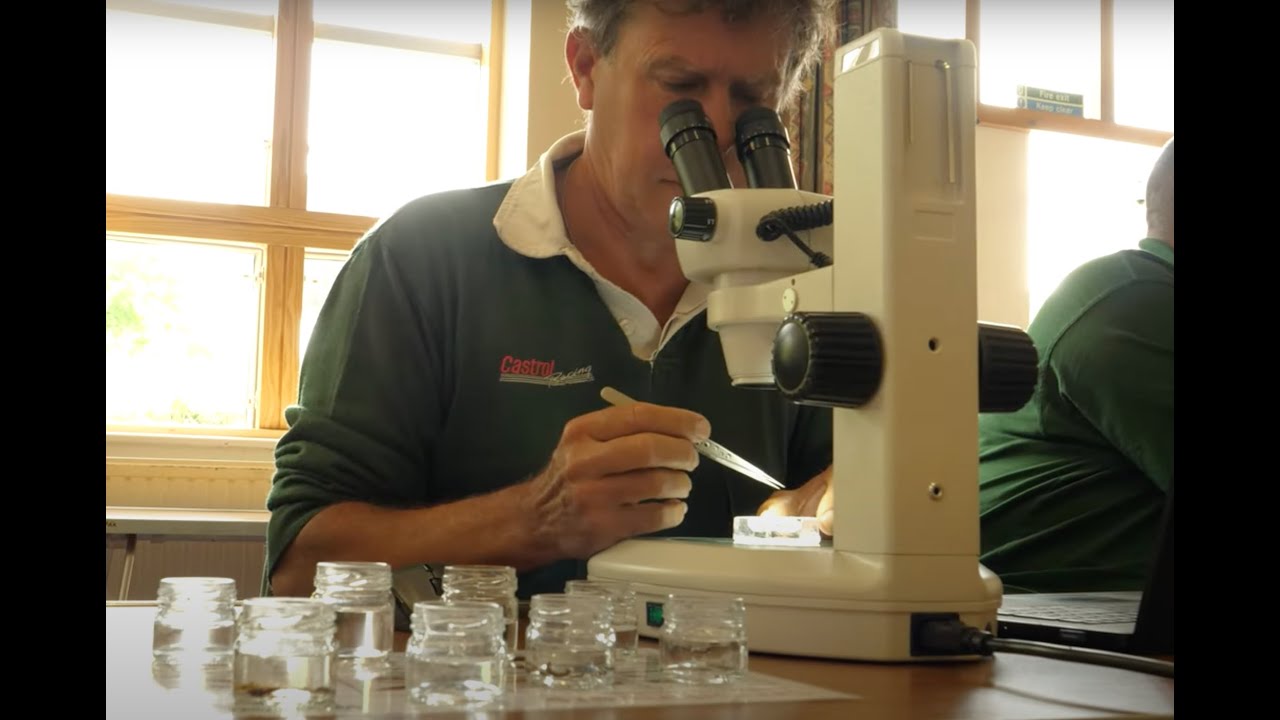
Why we've become a SmartRivers hub - Yealm Estuary to Moor
The Importance of EPT Species
Identifying caddisflies, mayflies, and stoneflies or EPT species is essential when assessing water quality and improving the conditions for fish. These insects serve as critical bioindicators with their presence, absence, and diversity directly reflecting levels of pollution and oxygen in the river.
These three orders are highly sensitive to pollution, particularly heavy metals and low oxygen levels.
-
Mayflies are generally sensitive, though tolerance varies by species.
-
Caddisflies indicate good water quality when diverse assemblages are present, though some species tolerate lower quality better than others.
-
Stoneflies require fast-flowing, clean, well-oxygenated water.
Surveys tracking these populations help conservationists monitor stream health and habitat degradation.
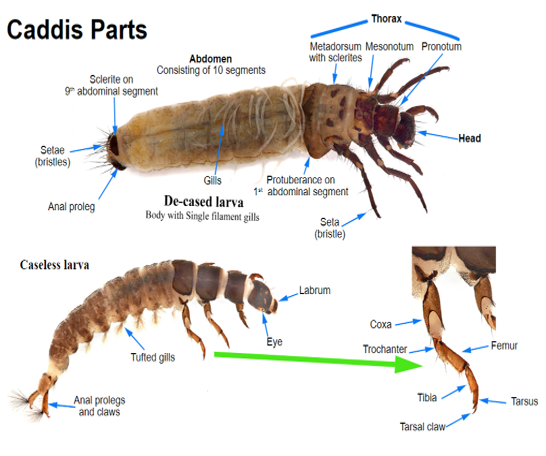
Caddisfly - Trichoptera
Stonefly - Plecoptera

Mayfly - Ephemeroptera
